Ashtanga Yoga vs Vinyasa: Key Differences, Benefits & Which Style Is Right for You?
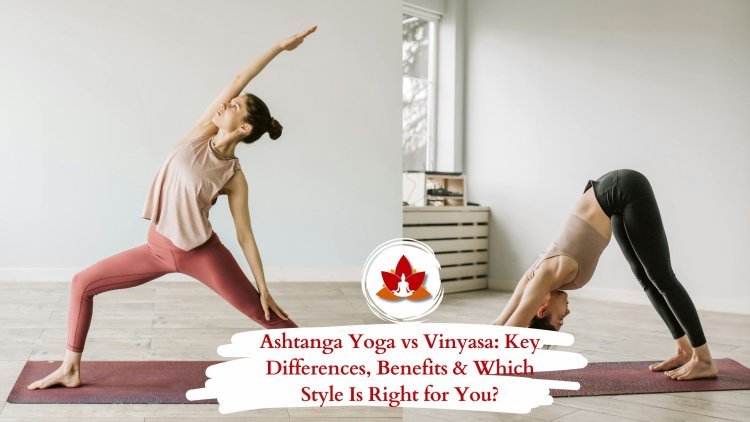
Choosing the right yoga style can feel confusing, especially when two popular practices like Ashtanga Yoga and Vinyasa Yoga look similar from the outside. Both styles connect breath with movement, build strength and flexibility, and support mental focus. However, the way they are practiced is quite different.
Ashtanga Yoga is more structured, traditional, and disciplined. It follows a fixed sequence of postures that students repeat regularly. Vinyasa Yoga, on the other hand, is more creative, fluid, and adaptable, with sequences that often change from class to class.
If you are wondering which one is better for your body, lifestyle, and goals, this guide will help you understand the real difference between Ashtanga and Vinyasa Yoga.
What Is the Main Difference Between Ashtanga and Vinyasa Yoga?
The main difference between Ashtanga Yoga and Vinyasa Yoga is structure. Ashtanga Yoga follows a fixed sequence of postures every time, while Vinyasa Yoga allows more creative sequencing and variation in each class.
Choose Ashtanga Yoga if you enjoy discipline, routine, traditional practice, and measurable progress. Choose Vinyasa Yoga if you prefer variety, creative flow, breath-led movement, and a more flexible class experience.
Ashtanga Yoga vs Vinyasa Yoga: Quick Comparison
|
Feature |
Ashtanga Yoga |
Vinyasa Yoga |
|
Structure |
Fixed sequence |
Creative and changing sequence |
|
Pace |
Usually strong and disciplined |
Can be gentle, moderate, or dynamic |
|
Best For |
Routine, strength, discipline, tradition |
Variety, flow, creativity, adaptability |
|
Beginner Friendly |
Yes, with proper guidance |
Yes, depending on the class level |
|
Breathwork |
Strong focus on Ujjayi breath |
Breath-led movement with flexibility |
|
Philosophy |
Strong traditional foundation |
Often more modern and flexible |
|
Class Style |
Repetitive and progressive |
Changes according to teacher or theme |
|
Main Feeling |
Discipline and depth |
Freedom and flow |
What Is Ashtanga Yoga?
Ashtanga Yoga is a traditional and systematic style of yoga that follows a fixed sequence of postures. The practice was popularized by Sri K. Pattabhi Jois and is rooted in discipline, consistency, breath awareness, and internal focus.
In Ashtanga Yoga, students practice the same sequence regularly, beginning with the Primary Series. Each posture is connected through breath, movement, gaze, and internal energy awareness. This creates a strong, meditative, and physically demanding practice.
Ashtanga is not just about doing difficult postures. It is a complete yogic system that includes physical practice, breath control, focus, discipline, and self-awareness.
Key Elements of Ashtanga Yoga
Fixed Sequence: Ashtanga follows a set order of postures, allowing students to measure progress over time.
Ujjayi Breath: A steady breathing technique that helps build focus, heat, and rhythm during practice.
Drishti: A specific gaze point used in each posture to improve concentration and inner awareness.
Bandhas: Internal energy locks that help create stability, control, and lightness in the body.
Discipline and Repetition: The same sequence is practiced repeatedly, helping students build strength, stamina, focus, and patience.
Who Is Ashtanga Yoga Best For?
Ashtanga Yoga may be a good choice if you:
-
Enjoy routine and structure in your practice
-
Want measurable progress over time
-
Like physically strong and disciplined yoga
-
Are interested in traditional yoga philosophy
-
Prefer practicing the same sequence until it becomes deeper and more refined
-
Want to build strength, flexibility, stamina, and mental focus
Ashtanga is especially suitable for students who are ready to commit to regular practice and enjoy learning step by step.
What Is Vinyasa Yoga?
Vinyasa Yoga is a dynamic and flowing style of yoga where movement is synchronized with breath. Unlike Ashtanga Yoga, Vinyasa does not usually follow one fixed sequence. Each class can be different depending on the teacher, theme, energy level, and intention of the session.
The word “Vinyasa” can be understood as placing movement in a mindful and intentional way. In a Vinyasa class, postures are linked through smooth transitions, creating a continuous flow.
Vinyasa Yoga can be gentle and calming, or strong and physically challenging. This flexibility makes it popular among beginners, regular practitioners, and students who enjoy variety.
Key Elements of Vinyasa Yoga
Creative Sequencing: Each class may have a different flow, theme, or focus.
Breath-Movement Connection: Movements are linked with inhalation and exhalation, creating a meditative rhythm.
Adaptability: Vinyasa can be modified for different levels, from beginner to advanced.
Flow-Based Practice: The practice feels smooth, continuous, and expressive.
Variety and Exploration: Students experience different postures, transitions, and class styles over time.
Who Is Vinyasa Yoga Best For?
Vinyasa Yoga may be a good choice if you:
-
Enjoy variety and creativity in your yoga practice
-
Prefer a flowing and dynamic class
-
Want a practice that can be gentle or strong depending on your mood
-
Like guided classes with teacher cues
-
Want to improve flexibility, strength, balance, and mindfulness
-
Feel bored by repeating the same sequence every day
Vinyasa is especially helpful for students who want movement, breath awareness, and freedom in their practice.
Key Differences Between Ashtanga and Vinyasa Yoga
Although both styles connect breath and movement, their approach is different. Understanding these differences can help you choose the right practice for your body and mind.
1. Sequence and Structure
The biggest difference between Ashtanga and Vinyasa is the sequence.
In Ashtanga Yoga, the sequence is fixed. Students repeat the same series of postures in the same order. This creates discipline, consistency, and measurable progress.
In Vinyasa Yoga, the sequence changes. Teachers can design different flows depending on the theme, level, or intention of the class. This gives students more variety and freedom.
Choose Ashtanga if you like routine and step-by-step progress.
Choose Vinyasa if you enjoy variety and creative movement.
2. Pace and Intensity
Ashtanga Yoga is usually physically demanding because it follows a strong and continuous sequence. It builds heat, stamina, strength, and endurance.
Vinyasa Yoga can vary a lot. Some classes are gentle and slow, while others are fast, sweaty, and powerful. The intensity depends on the teacher and class level.
Choose Ashtanga if you want a disciplined and physically strong practice.
Choose Vinyasa if you want flexibility in intensity and pace.
3. Breath and Movement
Both Ashtanga and Vinyasa use breath with movement, but the method can feel different.
Ashtanga Yoga uses a steady breath rhythm, often with Ujjayi breathing, to support focus and internal heat. Breath, posture, and gaze work together as a complete system.
Vinyasa Yoga also connects breath with movement, but it allows more flexibility. The breathing rhythm may change depending on the flow, posture, or style of class.
Choose Ashtanga if you want a disciplined breath-based system.
Choose Vinyasa if you want a more flexible breath-led flow.
4. Teacher Guidance
In traditional Ashtanga classes, especially Mysore-style practice, students often move through the sequence at their own pace while receiving individual guidance and adjustments from the teacher.
In Vinyasa classes, the teacher usually leads the whole group through a sequence with continuous verbal cues, alignment instructions, and modifications.
Choose Ashtanga if you like personal progress and self-practice with guidance.
Choose Vinyasa if you prefer a fully guided group class.
5. Philosophy and Tradition
Ashtanga Yoga has a strong connection with traditional yogic discipline and philosophy. It is deeply linked with the eight limbs of yoga, including ethical principles, breath, concentration, meditation, and self-study.
Vinyasa Yoga may also include philosophy, but many classes focus more on movement, breath, mindfulness, and creative expression.
Choose Ashtanga if you want a traditional and disciplined path.
Choose Vinyasa if you want a modern, adaptable, and creative approach.
Which Yoga Style Is Better for Beginners?
Both Ashtanga and Vinyasa can be suitable for beginners, but the right choice depends on your personality, fitness level, and learning style.
If you are a beginner who likes structure, discipline, and clear progress, Ashtanga Yoga can be a good choice with the right teacher and modifications.
If you are a beginner who prefers variety, gentle movement, and a more flexible approach, Vinyasa Yoga may feel more comfortable in the beginning.
The most important thing is not which style looks easier or harder. The best yoga style is the one you can practice consistently and safely.
Best Yoga Style Based on Your Goal
|
Your Goal |
Better Choice |
|
Build discipline |
Ashtanga Yoga |
|
Improve strength and stamina |
Ashtanga Yoga |
|
Enjoy creative movement |
Vinyasa Yoga |
|
Reduce stress through flow |
Vinyasa Yoga |
|
Learn traditional yoga deeply |
Ashtanga Yoga |
|
Try different sequences |
Vinyasa Yoga |
|
Track progress clearly |
Ashtanga Yoga |
|
Practice according to mood and energy |
Vinyasa Yoga |
|
Develop breath-movement awareness |
Both |
|
Build consistency |
Both, depending on your personality |
Common Mistakes Beginners Make When Choosing Between Ashtanga and Vinyasa
Choosing a yoga style is not only about difficulty level. Many beginners choose based on social media, trends, or what others recommend. This can lead to frustration if the style does not match their body, personality, or lifestyle.
Here are some common mistakes to avoid.
1. Choosing Only Based on Difficulty
Many beginners think the harder style is always better. This is not true.
Ashtanga may feel more disciplined and physically demanding, but that does not mean it is automatically better for everyone. Vinyasa can also be challenging depending on the teacher and class style.
Instead of asking, “Which one is harder?” ask yourself: Which style will I enjoy enough to practice regularly?
2. Ignoring Your Personality Type
Your personality matters when choosing a yoga style.
If you enjoy routine, structure, and repetition, Ashtanga may feel motivating. If you enjoy creativity, movement, music, and variety, Vinyasa may feel more natural.
The right practice should support your nature, not fight against it.
3. Thinking Only About Physical Benefits
Many people choose yoga for flexibility, weight loss, or strength. These are valid goals, but yoga is more than physical fitness.
Both Ashtanga and Vinyasa can support strength, flexibility, mental clarity, stress relief, and emotional balance. When choosing a style, think about how you want your mind to feel, not only your body.
4. Thinking One Style Is Better Than the Other
Ashtanga and Vinyasa are not competitors. They simply offer different experiences.
Ashtanga gives structure, discipline, repetition, and tradition. Vinyasa gives creativity, adaptability, movement, and flow.
There is no “better” style for everyone. There is only the style that is better for you at this stage of life.
5. Forgetting About Consistency
The best yoga style is not the one that looks impressive. It is the one you can practice consistently.
Practicing a style you enjoy three times a week is much better than forcing yourself into a style you dislike.
Consistency creates progress.
6. Comparing Your Practice With Social Media
Social media often shows advanced poses, deep backbends, arm balances, and perfect-looking flows. But yoga is not about looking impressive.
Yoga is about awareness, balance, breath, discipline, and connection with yourself.
Choose a practice that supports your body and mind, not one that only looks attractive online.
7. Expecting Immediate Results
Whether you choose Ashtanga or Vinyasa, progress takes time. Strength, flexibility, balance, and mental calmness are built through regular practice.
Do not judge your journey after only a few classes. Give your body time to learn and adapt.
Can You Practice Both Ashtanga and Vinyasa Yoga?
Yes, you can practice both Ashtanga and Vinyasa Yoga. In fact, many practitioners enjoy combining both styles.
Ashtanga can help you build discipline, strength, and consistency. Vinyasa can bring creativity, variety, and freedom into your practice.
A balanced weekly routine may look like this:
|
Day |
Practice |
|
Monday |
Ashtanga Yoga Primary Series |
|
Tuesday |
Gentle Vinyasa Flow |
|
Wednesday |
Ashtanga Strength Practice |
|
Thursday |
Vinyasa Flow for Flexibility |
|
Friday |
Short Ashtanga Sequence |
|
Saturday |
Relaxing Vinyasa Flow |
|
Sunday |
Rest or Guided Meditation |
This approach allows you to experience both structure and creativity without feeling stuck in one style.
Common Myths About Ashtanga and Vinyasa Yoga
There are many misunderstandings about both yoga styles. Let’s clear up some of the most common ones.
Myth 1: Ashtanga Yoga Is Only for Advanced Students
Many people think Ashtanga is only for strong or flexible practitioners. This is not true.
Beginners can start Ashtanga with proper guidance, modifications, and patience. Students usually begin slowly with basic postures, Sun Salutations, and foundational movements before going deeper.
Myth 2: Vinyasa Yoga Is Just a Workout
Vinyasa can be physically active, but it is not just a workout.
A well-taught Vinyasa class includes breath awareness, mindfulness, body awareness, focus, and meditative movement. It can support both physical fitness and mental balance.
Myth 3: You Need to Be Flexible Before Starting Yoga
You do not need to be flexible to begin yoga. Flexibility is one of the benefits that comes with regular practice.
Yoga meets you where you are.
Myth 4: One Style Is Better Than the Other
There is no one best yoga style for everyone.
Ashtanga and Vinyasa both have value. The right choice depends on your body, goals, energy, lifestyle, and personality.
Myth 5: You Must Choose One Style Forever
Your yoga practice can change over time. A style that feels right today may change as your body, mind, and goals evolve.
Yoga is a lifelong journey, and your practice can grow with you.
Signs You Have Chosen the Right Yoga Style
You may have chosen the right style if:
-
You look forward to practicing
-
You feel more consistent
-
You notice steady progress
-
You feel challenged but not discouraged
-
You leave class feeling better than before
-
You feel curious to learn more
-
Your body feels supported, not forced
The right yoga style should help you feel connected, not pressured.
Signs It May Be Time to Try Another Style
It may be time to explore another yoga style if:
-
You feel bored or unmotivated
-
You keep skipping classes
-
Your goals have changed
-
You feel physically uncomfortable or mentally disconnected
-
You need more variety
-
You need more structure
-
You feel curious about a different practice
Trying another style does not mean you are leaving your current practice behind. It simply means you are expanding your understanding of yoga.
Expert Guidance for Getting Started
Whether you feel drawn to the discipline of Ashtanga or the creative flow of Vinyasa, the most important thing is to learn with proper guidance.
At Rishikesh Yogkulam, students experience traditional yoga teachings in Rishikesh, India, with certified Indian yoga teachers. Our training includes Hatha Yoga, Ashtanga Vinyasa, alignment, pranayama, meditation, yoga philosophy, anatomy, and teaching methodology to help students build a safe and meaningful practice.
If you want to explore both traditional and dynamic yoga styles deeply, our 200 Hour Yoga Teacher Training in Rishikesh can help you build a strong foundation.
Final Takeaway: Which One Should You Choose?
The choice between Ashtanga Yoga and Vinyasa Yoga is not about which style is better. It is about which style is better for you right now.
Choose Ashtanga Yoga if you enjoy routine, discipline, tradition, and structured progress.
Choose Vinyasa Yoga if you enjoy creativity, variety, flowing movement, and adaptability.
Both styles can help you become stronger, calmer, more aware, and more connected with yourself. The best practice is the one that brings you back to your mat again and again.
Frequently Asked Questions
What's Your Reaction?