Aura Colors and Their Meanings: How to Identify Yours and What It Reveals

Aura Colors and Their Meanings
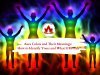
Aura colors are understood as a reflection of your emotional, energetic and spiritual state, each shade linked to particular qualities, feelings and experiences. Because that inner state changes, the colors are not thought to be fixed; they shift with mood, health and what you are living through. This guide explains what every aura color means, how to sense your own, and how the colors relate to the seven energy centers of the body.
By Ella Ji | Faculty, Subtle-Body and Meditation
Ella Ji is a meditation and Yin Yoga teacher (E-RYT 500) whose practice centers on subtle-body and energy work, drawing on her training in Reiki and aromatherapy. Her background in NLP and personal healing shapes a grounded, compassionate approach to the body's energy field and the colors associated with it.
Interested in working with your own energy? Our Online Ayurveda course introduces the practices behind color and energy healing.
What Is an Aura?
In traditional belief, an aura is a subtle energy field surrounding a living being that expresses aspects of their physical, emotional, mental and spiritual wellbeing. The energy of your thoughts, feelings and experiences is said to change over time, and as it does, the color, intensity and quality of the aura change with it.
Yogic and spiritual teachings usually describe several layers of the human energy field, each relating to a different aspect of wellbeing. As your inner state shifts, so do these layers and the energy that moves through them. Understanding these patterns gives a helpful structure for exploring the meanings traditionally attached to the different colors of the aura.
Aura Color Chart
The chart below is a quick reference to the meanings, associated chakras, positive qualities and possible imbalances of each aura color, so you can see at a glance how the colors relate to emotions, thoughts and behavior.
|
Aura Color |
Symbolism |
Associated Chakra |
Positive Qualities |
Possible Imbalance |
|---|---|---|---|---|
|
Red |
Strength, vitality |
Root |
Leadership, determination, courage |
Anger, impatience, restlessness |
|
Orange |
Creativity, warmth |
Sacral |
Enthusiasm, sociability, artistry |
Impulsiveness, scattered focus |
|
Yellow |
Optimism, intellect |
Solar Plexus |
Confidence, curiosity, clarity |
Anxiety, overthinking |
|
Green |
Growth, healing |
Heart |
Compassion, balance, nurturing |
Emotional vulnerability, burnout |
|
Blue |
Calm, wisdom |
Throat |
Honesty, empathy, clear communication |
Sadness, emotional distance |
|
Indigo |
Intuition, insight |
Third Eye |
Perception, sensitivity, awareness |
Overwhelm, exhaustion |
|
Purple |
Spirituality, vision |
Crown |
Imagination, spiritual awareness |
Feeling ungrounded |
|
Pink |
Tenderness, affection |
Heart |
Kindness, warmth, openness |
Over-giving, dependence |
|
White |
Purity, clarity |
Crown |
Peace, healing presence |
Tiredness, depleted energy |
|
Black |
Protection, transition |
None |
Shielding, inward focus, renewal |
Fatigue, low mood, stored tension |
Note:
-
The commonly used seven-colour chakra system includes: red, orange, yellow, green, blue, indigo, and violet.
-
Some modern chakra and energy-healing systems also use additional colours, such as pink or white, for certain chakras.
Aura Color Meanings: All Shades
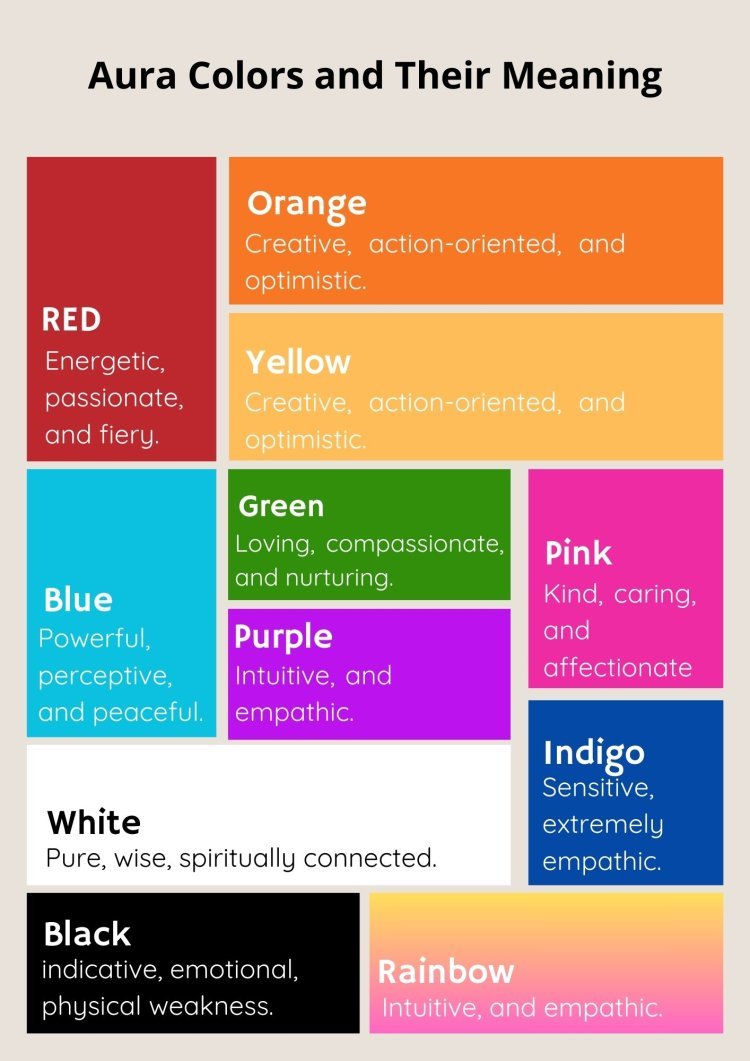
The colors of the aura are usually understood as a reflection of a person's emotional, energetic and spiritual condition. They are not permanent, and may appear to change with your thoughts, feelings, experiences and energy. Each color is linked to certain qualities and states of mind.
Below is a breakdown of aura color meanings for every shade, with guidance on how to recognize each color in yourself and others.
-
Red: vitality, passion, physical energy, determination and the drive to act.
-
Orange: creativity, enthusiasm, self-expression, enjoyment and openness to new experiences.
-
Yellow: courage, optimism, intellectual energy, curiosity and personal motivation.
-
Green: care, love, healing, balance, growth and a feeling of being at home in nature.
-
Pink: an open-hearted approach to relationships, along with tenderness, affection, kindness and emotional sensitivity.
-
Blue: calm, clear communication, wisdom, emotional depth and a sense of peace.
-
Purple (Violet): intuition, imagination, spiritual awareness and inner exploration.
-
Indigo: sensitivity, intuition, empathy, insight and a heightened awareness of emotions.
-
White: purity, clarity, spirituality and a sense of something beyond the everyday.
-
Black: in some readings, a time of fatigue, emotional weight or low energy; in others, a period of inner change and transition.
-
Rainbow: several energetic qualities at once, suggesting vitality, creativity, adaptability and dynamism.
Keep in mind that these interpretations come from spiritual traditions rather than scientific study. Your aura color is best used as a tool for self-reflection.
Each Aura Color Explained (Red to Black)
Red Aura Meaning: The Essence of Strength and Vitality
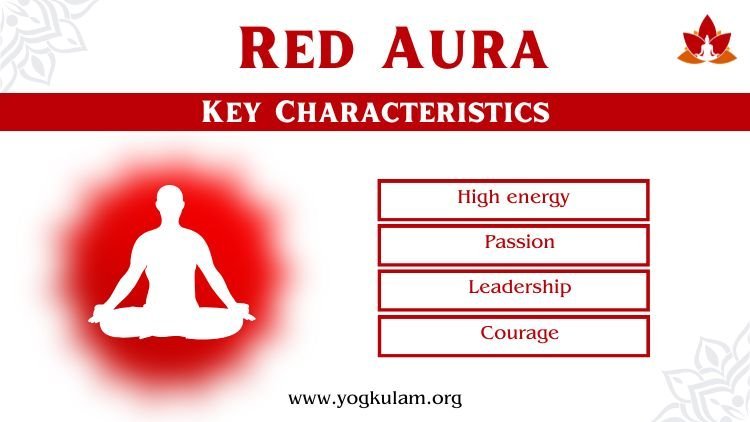
A red aura is said to indicate high energy, passion, ambition and leadership. People with a predominantly red aura are usually outgoing, enthusiastic and dynamic. They tend to take charge of a situation and make natural leaders, and their strong determination gives them a driven, goal-focused quality.
Key characteristics of a red aura personality:
-
High energy: they live at full pace and are drawn toward challenge.
-
Passion: a strong inner fire drives them to pursue their ambitions wholeheartedly.
-
Leadership: confident in their abilities, they step into responsibility readily.
-
Courage: they are bold and decisive, acting without much hesitation.
That same high energy can, at times, express itself as impulsiveness. Red-aura people may rush into things, which can lead to hasty decisions or friction when their intensity feels like too much for others.
Strengths and weaknesses of a red aura
-
Strengths: they spark energy in others and draw people in with their confidence and charisma. They believe in their ability to turn a goal into reality and work hard to make it happen.
-
Weaknesses: their spontaneity can tip into impulsiveness, and they sometimes struggle with patience or with making room for other people's views, which can create conflict when their intensity is not balanced by consideration.
At its best, a red aura balances its energy and passion with patience, planning and care for others, channeling that drive into steady, effective leadership.
-
Associated chakra: Root Chakra (grounding, security and survival).
-
Balanced vs. muddy: a clear, bright red reads as courage and vitality; a dense or muddy red can point to anger, frustration or restlessness.
Orange Aura Meaning: Creativity, Positivity and Enthusiasm
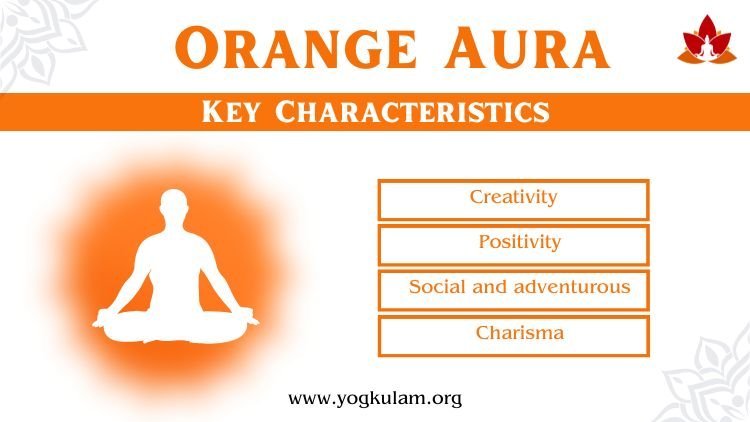
An orange aura is believed to reflect creativity, positivity and a real zest for life. People with a dominant orange aura tend to be outgoing, charismatic and full of energy. Their fun-loving nature makes them sociable and optimistic, and they often bring warmth and life to whatever they take part in.
Key orange aura personality traits:
-
Creativity: they think in fresh, original ways and enjoy bringing new ideas to life.
-
Positivity: their cheerfulness lifts and energizes the people around them.
-
Sociable and adventurous: they seek out new experiences and social connection, and thrive on freedom and exploration.
-
Charisma: their charm and evident enthusiasm are easy to be drawn toward.
Because their approach to life is so spontaneous, orange-aura people can also be prone to impulsiveness, moving quickly into new ideas and activities without much preparation. This can scatter their attention or make long-term commitments harder to hold.
Strengths and challenges of an orange aura
-
Strengths: they are natural lateral thinkers who bring unusual, innovative ideas to a group and spread a positive, energizing mood.
-
Weaknesses: they tend to dislike routine and can lose interest when things become too predictable or repetitive.
Channeled with focus and a little discipline, an orange aura's enthusiasm turns visionary ideas into real, productive results.
-
Associated chakra: Sacral Chakra (creativity, emotion and pleasure).
-
Balanced vs. muddy: a bright orange suggests healthy creative flow; a muddy orange can indicate scattered focus or difficulty following through.
Yellow Aura Meaning: Intellectual Energy, Curiosity and Analytical Ability
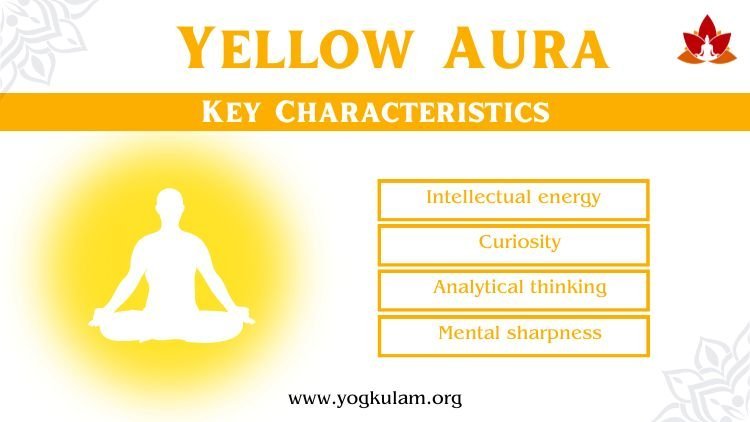
A yellow aura, as per tradition, represents intellectual energy, curiosity, and a sharp, analytical mind. People with a dominant yellow aura are naturally drawn to learning, problem-solving and mental challenge. They tend to be logical thinkers who work from facts and reason, and who enjoy being mentally stimulated.
Learn more: 200 Hour Yoga Teacher Training
Key personality traits of a yellow aura:
-
Intellectual energy: they thrive on mental challenge and grasp complex ideas readily.
-
Curiosity: they are lifelong learners, drawn to new information and ideas.
-
Analytical thinking: they break problems down and look for logical, well-reasoned solutions.
-
Mental sharpness: quick-thinking, they enjoy puzzles and stimulating conversation.
This same strength can turn into overthinking, where simple matters become complicated and mental strain builds when they feel unproductive. A yellow aura often needs steady stimulation and can grow restless without enough to engage the mind.
Strengths and challenges of a yellow aura
-
Strengths: they are strong problem-solvers and strategic thinkers who decode complex ideas well, learn quickly and often bring an innovative edge.
-
Weaknesses: when mental activity is not balanced with physical and emotional care, they can become emotionally distant and prone to stress from overthinking.
Balance comes from relaxation and grounding practices that reconnect the mind with the body and emotions, keeping that bright intellect both healthy and productive.
-
Associated chakra: Solar Plexus Chakra (personal power, confidence and self-esteem).
-
Balanced vs. muddy: a clear yellow reflects optimism and mental clarity; a muddy yellow can signal anxiety, stress or an overactive mind.
Green Aura Meaning: Nurturing, Healing and Balance
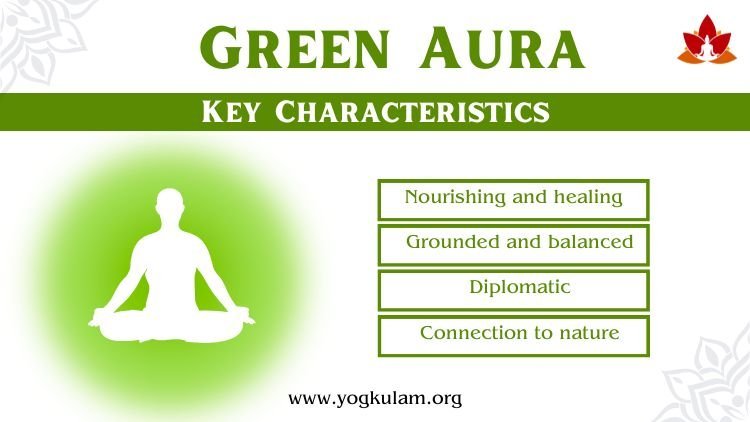
A green aura, in aura-reading traditions, is strongly associated with nurturing, healing and a deep connection to nature. People with a dominant green aura tend to be compassionate, stable and grounded, seeking harmony and balance in every area of life. Their calm, reassuring presence makes them natural peacemakers and trusted advisers.
Key traits of a green aura personality:
-
Nurturing and healing: they carry deep empathy and often become caregivers or healers within their circle.
-
Grounded and balanced: they value stability and are uneasy with disorder, whether personal or professional.
-
Diplomatic: their calm, considered presence helps them settle disputes and give sound advice.
-
Connected to nature: they feel close to the natural world and draw peace and inspiration from it.
Their empathy can, however, lead them to take on others' troubles and neglect their own needs, and their strong desire for stability can make change harder to accept.
Strengths and weaknesses of a green aura
-
Strengths: dependable, loyal and emotionally intuitive, a green-aura person is often a mentor or counselor to others, offering genuine emotional support and sensing instinctively what people need.
-
Weaknesses: they can struggle to put themselves first and so risk emotional burnout, and a resistance to change can sometimes hold back their own growth.
As they learn to welcome change and care for themselves, green-aura people find deeper peace, and their instinct for healing others is matched by their own steady development.
Learn more: 300 Hour Yoga Teacher Training
-
Associated chakra: Heart Chakra (love and compassion).
-
Balanced vs. muddy: a vibrant green suggests emotional balance and healing; a muddy green can point to emotional vulnerability or burnout.
Blue Aura Meaning: Spiritual Energy, Wisdom and Inner Peace
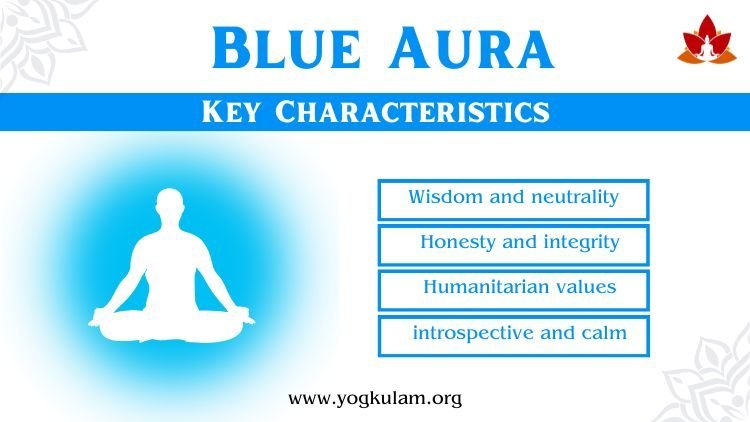
A blue aura traditionally represents serenity, quiet strength and deep wisdom. People with a predominantly blue aura tend to be reflective, intuitive and closely connected to their inner life. They are guided by truth, integrity and meaningful pursuits, and others often look to them for a steady moral compass.
Key personality traits of a blue aura:
-
Inwardly oriented: they are motivated by a search for deeper understanding of themselves and the world.
-
Wisdom and perspective: they look past the surface of a situation and offer measured, thoughtful responses.
-
Honesty and integrity: they hold to truth and high ideals, and their actions tend to match those standards.
-
Humanitarian values: they are drawn to fairness and the wellbeing of others, and will speak up for meaningful change.
Reflective and calm as they are, blue-aura people can withdraw into solitude to process their thoughts, which may sometimes read as distance. That quiet is usually part of how they reach the deeper understanding they value.
Strengths and weaknesses of a blue aura
-
Strengths: wise, intuitive and calming, they are strong reflective thinkers whose grounded insight helps others see a situation more clearly and honestly.
-
Weaknesses: their tendency to withdraw can read as emotional detachment, and they sometimes find it hard to balance their inner world with their outer relationships.
At their best, blue-aura people use their wisdom and insight to guide both themselves and others, offering clarity and truth amid distraction.
-
Associated chakra: Throat Chakra (communication and truth).
-
Balanced vs. muddy: a clear blue suggests calm and honest expression; a muddy blue can indicate sadness or a need for emotional healing.
Indigo Aura Meaning: Intuition, Insight and Spiritual Depth
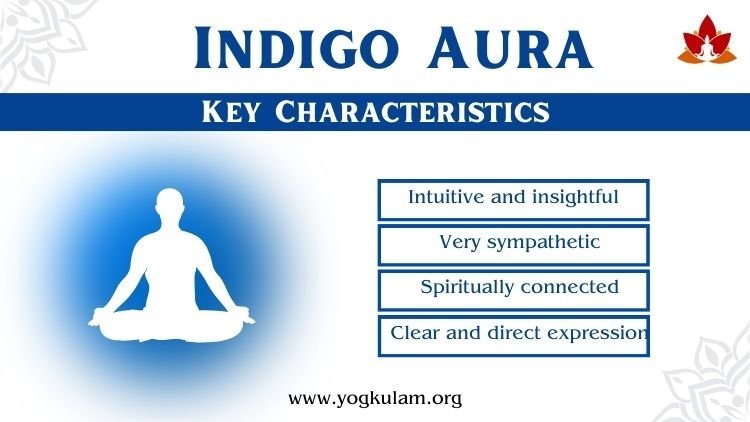
An indigo aura is marked by deep intuition and inner insight, and people who carry it are often strongly connected to the subconscious. They tend to have an innate wisdom that runs deeper than reasoning, perceiving energies, emotions and motivations at a subtle level. This makes them highly sensitive to others, able to empathize and to offer compassionate, perceptive guidance.
Key traits of an indigo aura personality:
-
Intuitive and insightful: they sense more than what appears on the surface and read situations others miss.
-
Highly empathetic: attuned to the energy and emotions around them, they pick up subtle cues and can support others meaningfully.
-
Spiritually connected: they prioritize spiritual depth, self-awareness and personal growth over material success or outside approval.
-
Clear expression: for all their inner depth, they can put complex ideas into simple, direct words.
They need solitude and meditation to settle and recharge, and these practices help keep them balanced and grounded.
Strengths and weaknesses of an indigo aura
-
Strengths: deeply intuitive, perceptive and empathetic, they carry a calm, grounded energy and tend to respond with presence and wisdom rather than reactivity, guided by an inner sense of purpose.
-
Weaknesses: their sensitivity can lead to emotional exhaustion, especially when they absorb others' energy, and their depth and quietness can leave them feeling misunderstood or isolated without regular self-care.
Indigo-aura people tend to walk their path of self-discovery quietly; even when they cannot fully put their inner world into words, their calm presence helps guide others toward deeper understanding.
Learn more: 500 Hour Yoga Teacher Training
-
Associated chakra: Third Eye Chakra (intuition and awareness).
-
Balanced vs. muddy: a clear indigo reflects insight and calm perception; a muddy indigo can suggest overwhelm or emotional exhaustion.
Purple (Violet) Aura Meaning: Spiritual Awareness, Intuition and Vision
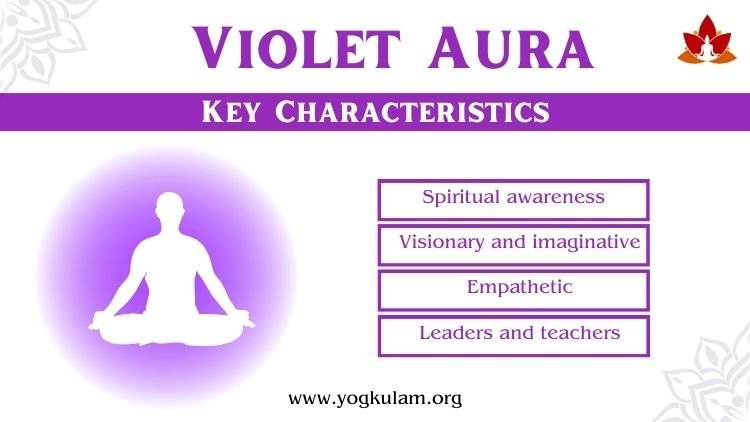
A purple aura is uncommon and describes a strong connection to spiritual awareness and to parts of experience beyond the everyday. People with a dominant purple aura usually show a high degree of intuition, imagination and vision, along with a sense of insight that goes past purely rational thinking. They often make natural leaders, teachers or artists, inspiring others and drawing them toward deeper meaning.
Key features of a purple aura personality:
-
Spiritual awareness: they feel connected to a larger sense of consciousness and to their own growth.
-
Visionary and imaginative: able to see beyond the ordinary, they are creative, original thinkers.
-
Empathetic: they feel a deep connection with others and are attuned to the energy around them.
-
Guiding and teaching: they often find themselves uplifting others and guiding them toward growth and understanding.
For all their wisdom, purple-aura people can sometimes seem to drift, getting lost in imaginative or abstract thought. That same quality, though, is often what lets them see alternative solutions and inspire others.
Strengths and challenges of a purple aura
-
Strengths: intuitive and spiritually attuned, they bring a calming presence and insight that can genuinely help others grow.
-
Challenges: their dreamier nature can read as detached to more practical people, and they may struggle to stay anchored in day-to-day reality, which can lead to a sense of isolation.
A purple aura carries a transformative quality, kindling spiritual awareness in the person and in those around them, and it works best when that vision stays connected to the ground.
-
Associated chakra: Crown Chakra (higher consciousness).
-
Balanced vs. muddy: a clear purple suggests spiritual awareness and vision; a muddy purple can indicate feeling overwhelmed or ungrounded.
Pink Aura Meaning: Tenderness, Affection and Compassion
A pink aura is said to reflect gentleness, warmth and an open-hearted approach to relationships. People with a dominant pink aura tend to be kind, affectionate and emotionally generous, and they offer comfort and reassurance to others easily. Where red speaks of drive and green of steady care, pink carries a softer, more tender quality of the heart.
Key traits of a pink aura personality:
-
Loving and affectionate: they express warmth naturally and value close, caring relationships.
-
Kind and compassionate: they are quick to offer support and put others at ease.
-
Emotionally sensitive: they are attuned to feelings, their own and other people's.
-
Gentle and reassuring: their presence tends to feel calming and safe.
Because they give so openly, pink-aura people can sometimes over-extend themselves or lean too heavily on a relationship for a sense of self, which is where healthy boundaries matter most.
Strengths and challenges of a pink aura
-
Strengths: their warmth and kindness build trust quickly, and they are often the emotional anchor within a group of friends or family.
-
Weaknesses: without boundaries they can slip into over-giving or emotional dependence, losing sight of their own needs.
At its best, a pink aura pairs its natural tenderness with self-respect, offering love freely while staying whole in itself.
-
Associated chakra: Heart Chakra, in its softer, nurturing expression (love and compassion).
-
Balanced vs. muddy: a soft, clear pink suggests warmth and loving connection; a muddy pink can point to over-giving or emotional dependence.
White Aura Meaning: Spiritual Purity, Clarity and Divine Connection
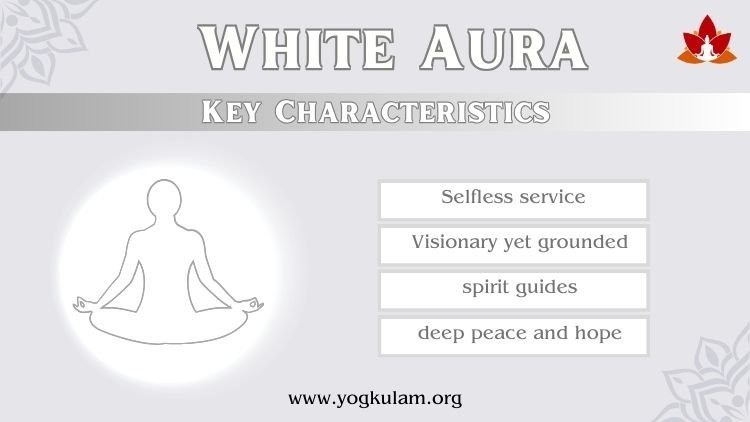
A white aura is traditionally seen as one of the rarest, linked to purity, clarity, and a strong sense of spiritual connection. It is described as a state of real harmony between body, mind, and spirit, and people associated with a white presence are said to bring a calm, healing quality to those around them. It is more often noted in moments of deep peace than as a permanent color.
Key traits of a white aura personality:
-
Spiritual clarity: their energy is described as peaceful and pure, with a calming, healing effect on others.
-
Selfless: they tend to act from compassion rather than ego or personal agenda.
-
Visionary yet grounded: they can draw on spiritual insight while remaining practical enough to put it to use.
People associated with a white aura are often described as a steadying, guiding presence, bringing peace and a sense of connection to those seeking it.
Strengths and challenges of a white aura
-
Strengths: their gentle wisdom and healing presence, combined with a practical grounding, help others find alignment between the spiritual and everyday sides of life.
-
Challenges: the state is rare, and those who reach it may feel somewhat apart from the world, which can make them seem hard to relate to even as their presence remains calming.
-
Associated chakra: Crown Chakra (spiritual connection).
-
Balanced vs. muddy: a clear white suggests clarity and peace; a dull or cloudy white can simply reflect tiredness or depleted energy.
Black Aura Meaning: A Time of Deep Transformation and Release
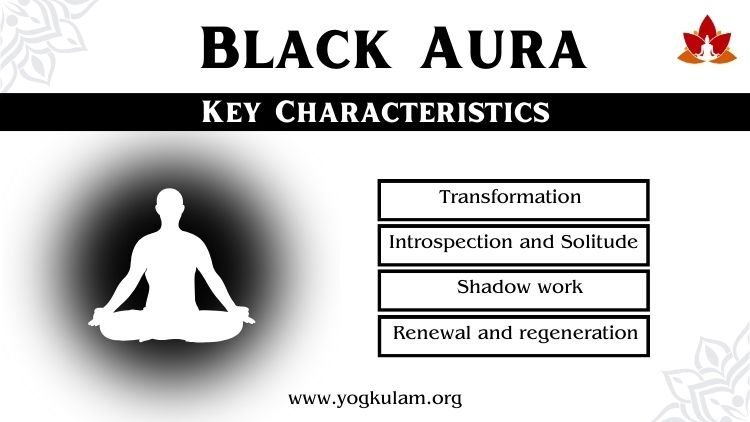
A black aura is uncommon and is usually interpreted as a phase of significant inner change rather than a fixed personality trait. It is associated with clearing away what no longer serves a person, whether that is a destructive habit, a limiting belief, an unhealthy attachment, or an old sense of self. It is often described as a period of deep inner work, in which someone turns inward to release stored energy and make room for renewal.
Key characteristics of a black aura phase:
-
Transformation and release: old patterns are being cleared to make way for a renewed sense of self.
-
Introspection and solitude: people in this phase often step back from others to do focused inner work.
-
Shadow work: they face unresolved emotional or spiritual material and let it go.
-
Renewal: as the phase completes, the tradition holds that a person emerges lighter and more aligned.
Though this stage can bring challenge and a sense of isolation, it is seen as a turning point on the spiritual path, with the promise of growth on the other side. Met with courage and self-compassion, it clears the way for a person's own light to return more strongly.
Strengths and challenges of a black aura
-
Strengths: as a protective, inward state, it points to the strength to face difficult inner material and to a real capacity for renewal.
-
Challenges: its introspective intensity calls for solitude and can be emotionally demanding, asking for patience and self-compassion.
-
Associated chakra: none traditionally; black is often read as a protective or shielding state.
-
Balanced vs. muddy: as a shield, black can suggest protection and inward focus; as heaviness, it can point to fatigue, low mood or the need to release stored tension.
What Color Is My Aura? (How to See It)
There is no scientific test for an aura, so the traditional approaches rely on quiet attention rather than equipment. One option is to visit an experienced practitioner; another, popular for its simplicity, is aura photography, which uses specialized equipment to produce an image interpreted as the colors and energy around you. If that appeals, look for a reputable aura-photography service near you.
The other approach is meditation and gentle self-observation. Sit comfortably, relax the mind and take several slow breaths to settle. Then, without forcing a result, simply notice any colors, sensations, feelings or images that arise. Used this way, it becomes a reflective tool for sensing and connecting with your own emotional and energetic state.
How to View Another Person's Aura
Learning to sense another person's aura is simpler than many expect, though it does ask for focus and patience. A few steps help you begin:
-
Find a quiet spot. Choose a calm, softly lit space with as few distractions as possible so you can settle your attention.
-
Soften your gaze. Rest your attention on the person, but look just beyond the edge of their body rather than directly at them.
-
Look for a subtle glow. With time, you may begin to notice a faint glow or outline around the body, sometimes with a hint of color or a shift in the surrounding energy.
-
Practise patiently. Few people see auras clearly straight away; the ability tends to develop gradually as your focus and observation refine, so there is no need to judge the process.
Aura Colors and the Chakras
In yogic traditions, aura colors are often linked to the seven chakras, the energy centers running along the body, each traditionally associated with its own color and its own physical, emotional or spiritual qualities. Rather than treating these colors as fixed labels, this view sees them as changing reflections of your inner state.
In the subtle-body and meditation sessions Ella Ji leads at Rishikesh Yogkulam, these energy centers are explored through yoga postures, breathwork (pranayama), meditation and mindful movement, all used to encourage balance and awareness. A session focused on a particular chakra might combine the postures, breathing and relaxation associated with that center, helping you become more aware of the energy the corresponding aura color is said to express. Worked with this way, color becomes a doorway into practice rather than simply a description.
How to Cleanse or Change Your Aura
If you would like to refresh or strengthen your aura, the following simple, traditional practices are used to lift the energy field and support your wellbeing.
-
Notice negative patterns. Begin by recognizing the recurring thoughts or habits that may be weighing on your energy. Negative energy is said to dull the aura and affect mood and health, and mindfulness helps you see these patterns so you can start to release them.
-
Meditate regularly. A steady daily practice is one of the most effective ways to calm the mind, release negativity and deepen your sense of connection, and it helps keep tension from building in the energy field.
-
Choose supportive company and surroundings. The people and environments around you are believed to influence your aura, so time with positive, grounded people and in restful settings can lift and steady your energy.
-
Spend time in nature. Natural surroundings are described as restorative. Walking among trees or sitting near water brings a grounding, peaceful quality that helps settle the aura.
-
Rest and nourish the body. Enough sleep, a wholesome diet of whole foods and good hydration keep the energy field feeling balanced and vibrant, supporting physical, emotional and spiritual wellbeing.
-
Use energy practices. Hatha yoga, pranayama, Reiki and similar practices are traditionally used to improve the flow of energy, clear blockages and bring the aura into balance.
-
Be patient and consistent. Working with the aura takes time. Practised regularly, these methods are said to bring a gradual sense of greater wellbeing, spiritual growth and a more positive energy field.
Frequently Asked Questions
What's Your Reaction?