Understanding Diastasis Recti & How Yoga Can Help Recovery
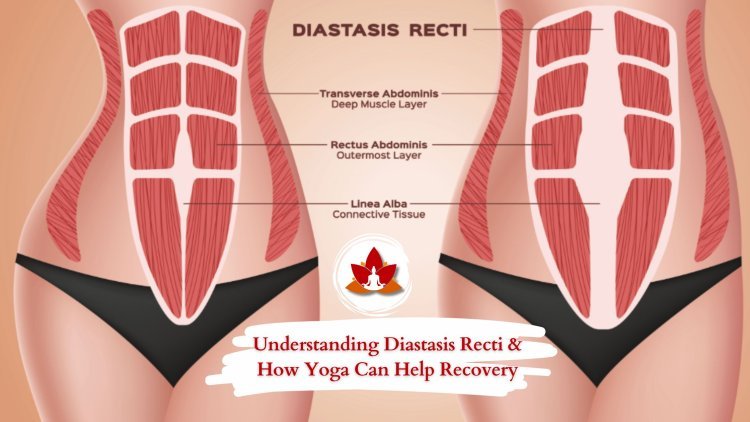
Rectus abdominis diastasis—commonly known as abdominal separation or sometimes referred to as a “false hernia”—is a condition caused by increased pressure within the abdomen. It most often occurs during and after pregnancy, though it can also affect non-pregnant women.
Research shows that diastasis recti is present in approximately 66% of women during the third trimester of pregnancy and about 36% of women between five to seven weeks postpartum. The condition develops when the connective tissue between the abdominal muscles stretches and weakens. At rest, the muscles appear elongated, and during core engagement, a visible bulge may form between the sternum and the navel.
Many people describe this bulge as resembling a “shark’s fin,” making it easier to identify once it appears. While not always painful, diastasis recti can lead to abdominal weakness, reduced core stability, and postural challenges if left unaddressed.
In this article, you’ll learn how a safe, mindful yoga practice can support healing, strengthen the core correctly, and help you manage this commonly misunderstood condition with awareness and confidence.
What Is Diastasis Recti?
Diastasis recti is a condition in which the abdominal muscles separate due to excessive stretching—most commonly during pregnancy. This separation affects the rectus abdominis, the pair of long muscles running vertically along the front of the abdomen, often referred to as the “six-pack” muscles.
Under normal circumstances, these two muscles are connected by a strong band of connective tissue called the linea alba, which keeps the abdominal wall firm and supportive. As the uterus expands during pregnancy, the linea alba stretches, thins, and gradually separates to accommodate the growing baby.
After childbirth, the linea alba typically begins to recover and draw back together. Like a rubber band, it has a natural elasticity that allows it to retract. However, when it is overstretched beyond its capacity, it may lose this elasticity. As a result, the gap between the abdominal muscles does not fully close, leaving the left and right sides of the abdomen separated and pushed outward. This condition is known as diastasis recti, and it can range from mild to severe.
Studies suggest that diastasis recti affects around 6 out of 10 women after childbirth. One of the most noticeable signs is a persistent abdominal bulge above or below the navel, which can create the appearance of being pregnant even months or years after delivery.
Symptoms and Causes of Diastasis Recti
Diastasis recti can be present as early as a few weeks postpartum and is commonly identified by the following signs:
Common Symptoms
-
A visible bulge or ridge above or below the belly button, even after postpartum weight loss
-
A soft, jelly-like feeling around the navel area
-
Doming or coning of the abdomen during movement or core engagement
-
Difficulty lifting objects, walking, or performing everyday activities
-
Lower back pain due to reduced core support
-
Poor posture and a feeling of abdominal instability
Understanding these symptoms is the first step toward safe recovery. With proper guidance, mindful movement, and a supportive yoga practice, diastasis recti can be managed and improved over time.
How Does Diastasis Recti Feel?
Diastasis recti itself is not painful. However, the side effects that accompany abdominal separation can lead to discomfort or pain over time. The separation weakens the core, which may cause strain in the lower back or abdomen—especially during everyday activities such as lifting a laundry basket, standing up, or carrying a child.
Many people describe a soft, jelly-like sensation along the midline of the abdomen, particularly between the abdominal muscles when they attempt to engage their core. Others notice a feeling of instability or lack of support in the belly during movement.
Risk Factors for Diastasis Recti
Several factors can increase the likelihood of developing diastasis recti, including:
-
Less than 12 months between pregnancies
-
Being 35 years of age or older
-
Carrying twins or triplets
-
Having a large or heavy baby
-
Having a petite body frame
-
Excessive or forceful pushing during childbirth
Complications of Diastasis Recti
If diastasis recti is severe or left untreated, it may lead to additional complications, such as:
-
Umbilical hernia
-
Chronic constipation
-
Increased or persistent lower back pain
-
Urinary leakage
-
Pain or discomfort during sexual intercourse
-
Pelvic and hip pain
Early awareness and a safe, targeted approach—such as mindful yoga, core retraining, and postural support—can significantly reduce these risks and promote long-term recovery.
The Role of Yoga in Diastasis Recti Recovery
Yoga can be a powerful complementary approach to conventional treatment for Diastasis Recti Abdominis (DRA). When practiced mindfully and safely, yoga supports healing by strengthening the core, improving posture, and teaching effective breath and pressure management.
Strengthening the Core: Focus on the Deep Core
In DRA-safe yoga, the emphasis is on activating the deep core muscles rather than forcing surface-level strength. This is often described as “cinching the waist” or “gently scooping the belly toward the spine.”
These actions engage the transverse abdominis, which acts like an internal corset. By activating these deep stabilizing muscles, yoga helps support the linea alba, encourages the abdominal muscles to draw closer together, and reduces strain on the weakened midline tissue.
Improved Posture and Alignment
Pregnancy and the physical demands of early motherhood often lead to postural changes, such as a flared rib cage or an anterior pelvic tilt. Yoga emphasizes alignment, body awareness, and balanced strength, encouraging the rib cage to stack naturally over the pelvis.
Postures that strengthen the back body—especially the glutes and spinal muscles—help correct muscular imbalances, reduce pressure on the abdomen, and restore functional core engagement in daily movements.
Mindfulness and Breathwork (Pranayama)
Diastasis recti is fundamentally a pressure management issue, making conscious breathing essential to recovery. Instead of traditional “belly breathing,” which can push the abdomen outward, DRA-safe yoga focuses on 360-degree breathing—directing the inhale into the side and back ribs while maintaining gentle abdominal support.
This breathing pattern allows the abdominal muscles to lengthen eccentrically, supports pressure regulation, and helps prevent abdominal bulging. In addition, the mindfulness cultivated through yoga reduces stress, which plays a vital role in supporting the body’s natural healing and repair processes.
Safe and Effective Yoga Poses for Diastasis Recti
The following yoga poses are designed to strengthen the core gently and effectively without creating excessive or forward pressure on the abdominal wall. When practiced with awareness and proper breath control, these movements can support healing and rebuild stability safely.
Foundational Movements and Postures
Reclined or Seated Core Contractions (Pelvic Tilts)
These subtle movements are often the first step in reconnecting with the deep core muscles.
-
Lie on your back with your knees bent and feet flat on the floor, or sit upright with a neutral spine.
-
Inhale deeply into the back and sides of the rib cage.
-
As you exhale, gently draw your navel toward your spine, engaging the abdomen as if you were fastening a soft corset.
-
Hold for a few breaths, then slowly release.
Modified Cat–Cow Stretch
This classic spinal warm-up can be highly beneficial when performed mindfully.
-
In Cow Pose, avoid overstretching the abdomen or flaring the ribs outward.
-
Keep the belly gently supported and focus the movement primarily in the upper back (thoracic spine) rather than the lower back.
-
Move slowly with the breath to maintain control and stability.
Supine Toe Taps (Modified Dead Bug)
This exercise helps build core strength while maintaining abdominal control.
-
Lie on your back with your knees bent at a 90-degree angle (tabletop position).
-
Keeping your lower back gently connected to the mat, tap one toe toward the floor at a time.
-
Maintain steady core engagement throughout the movement.
-
If your lower back arches or your belly begins to bulge, stop the exercise and return to a simpler variation.
Building Strength Safely
Bird-Dog (Extended Variation)
This pose is excellent for developing core stability and coordination.
-
Begin on hands and knees with a neutral spine.
-
Extend the opposite arm and leg while keeping the back flat and the core consciously engaged.
-
Avoid shifting weight or arching the back as you hold the pose for a few breaths.
Bridge Pose with Hip Engagement
Bridge Pose strengthens the glutes and hamstrings while supporting core recovery.
-
Lie on your back with knees bent and feet hip-width apart.
-
Press into your feet and lift your hips using the glutes and hamstrings, keeping the abdomen gently drawn in.
-
Maintain a flat, supported belly rather than pushing the abdomen upward.
-
As strength improves, gentle variations can be introduced gradually.
Yoga Postures and Movements to Avoid or Modify with Diastasis Recti
Certain yoga postures commonly practiced in classical yoga can place excessive forward pressure on the healing linea alba. This added strain may widen the abdominal separation or slow down the recovery process. For safe and effective healing, these movements should be avoided or carefully modified.
High-Pressure Abdominal Movements
These exercises place strong, direct force on the abdominal wall and are not recommended during diastasis recti recovery:
-
Crunches, Sit-Ups, and Jackknife Movements
These movements isolate and forcefully contract the rectus abdominis against gravity, increasing pressure along the midline and potentially worsening separation. -
Boat Pose (Navasana)
This pose creates a strong forward pull on the abdominal wall and often leads to visible doming or coning of the abdomen. -
Double Leg Lifts
Lifting both legs together places excessive strain on the lower abdomen and frequently causes the lower back to arch away from the mat, increasing intra-abdominal pressure.
Movements That Overstretch the Linea Alba
Overstretching the front of the body can further weaken already stressed connective tissue:
-
Deep Backbends
Poses such as Full Cobra, Upward-Facing Dog, and Wheel Pose push the lower ribs forward and intensely stretch the front abdominal wall, placing unnecessary strain on the linea alba. -
Anjaneyasana (Low Lunge) with Deep Stretch
In deep lunges, be mindful not to overstretch the belly. Maintain gentle core engagement and keep the rib cage stacked over the pelvis to protect the midline.
Deep Twists and Pranayama Considerations
-
Deep, Forceful Twists
Avoid intense twisting postures that compress the abdomen. Instead, practice upright, elongated twists that engage the oblique muscles while maintaining spinal length and abdominal support. -
Belly Breathing and Breath Retention
Avoid consciously pushing the belly outward during inhalation. Additionally, pranayama practices that involve long breath retention should be avoided, as they significantly increase intra-abdominal pressure and may interfere with healing.
Tips for an Effective Diastasis Recti Recovery
Healing diastasis recti takes patience, consistency, and the right guidance. With a mindful approach, the body has a remarkable capacity to restore strength and stability over time.
1. Seek Professional Guidance
Before starting any postpartum exercise routine, it’s essential to consult your healthcare provider. Working with a pelvic floor physical therapist or a certified postnatal yoga instructor can make a significant difference. These professionals can assess your unique condition, teach proper core engagement, and ensure movements are performed safely and effectively.
2. Be Consistent, Not Intense
When it comes to recovery, regularity matters more than intensity. Short, daily practices of 10–15 minutes are far more effective than infrequent, strenuous workouts that may increase the risk of injury. Focus on mindful movement, controlled breathing, and quality over quantity.
3. Learn to Self-Check Your Core
Develop the habit of observing your abdomen during movement. If you notice bulging or coning along the midline, it’s a clear sign that the exercise should be modified or avoided. This awareness helps protect the healing linea alba and supports long-term progress.
4. Support Healing with Nutrition and Self-Care
Your body needs proper nourishment to repair connective tissue. Prioritize a nutrient-dense diet rich in protein and collagen-supporting nutrients such as vitamin C, zinc, and vitamin E. Staying well-hydrated and managing stress through meditation or gentle relaxation practices further supports physical healing.
5. Move Mindfully Throughout the Day
Core engagement isn’t limited to yoga practice—it’s part of everyday life. Use core-protective movement patterns, such as rolling onto your side before getting out of bed or off the couch, to avoid unnecessary strain on the abdominal wall.
Conclusion
With time and consistent practice, improved core stability can lead to gradual strengthening of the rectus abdominis muscles. In rare cases where the abdominal gap remains significant or causes ongoing abdominal or pelvic dysfunction, surgical intervention may be considered—but this is uncommon.
If you experience pain during specific movements or signs of pelvic floor instability, always consult a healthcare professional. Above all, remain attentive to how your body responds, and approach recovery with curiosity, patience, and compassion.
Guidance from an experienced yoga teacher with a strong understanding of anatomy can keep you on the right path. Such support is readily available through Rishikesh Yogkulam’s Prenatal and Postnatal Yoga Teacher Training programs, which focus on holistic healing, mindful practice, and a truly life-changing yogic journey for sincere seekers of authentic wisdom.
Frequently Asked Questions
What's Your Reaction?