Yoga Poses to Avoid During Pregnancy: A Teacher's Guide
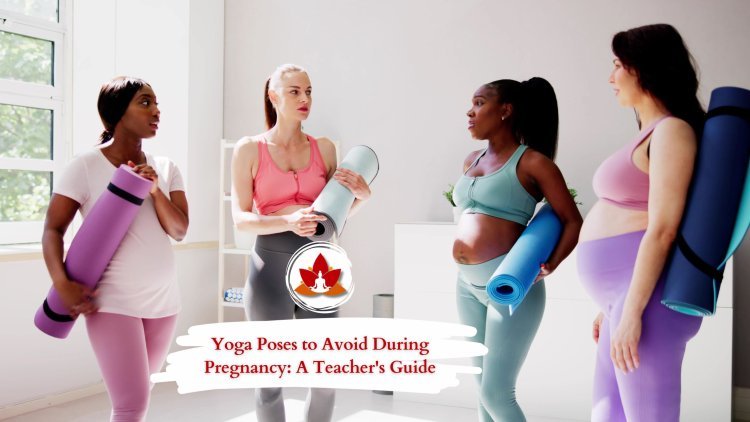
Are you aspiring to become a confident, well-informed yoga teacher who can support expectant mothers through a safe and empowering pregnancy journey? If so, understanding what not to teach is just as important as knowing what to include.
Pregnancy is a period of profound transformation—physically, emotionally, and hormonally. For many women, yoga becomes a powerful tool to navigate these changes, offering benefits such as improved strength, reduced stress, enhanced breath awareness, and a deeper connection with their growing baby. When practiced mindfully, yoga can be a beautiful companion throughout pregnancy.
In fact, modified yoga practices are widely recognized as safe and beneficial during pregnancy, including by the American College of Obstetricians and Gynecologists (ACOG). However, the key word here is modified.
A pregnant body is not static. Its needs evolve from trimester to trimester, influenced by changes in balance, joint stability, circulation, and the growing belly. What feels comfortable and safe in the first trimester may no longer be appropriate later on. This is why, as a yoga teacher, it is essential to clearly understand which yoga poses should be avoided or adapted during pregnancy.
This guide on Yoga Poses to Avoid During Pregnancy is designed specifically for teachers. It highlights crucial safety considerations, outlines poses that should be avoided or carefully modified, and offers practical teaching insights to help you support pregnant students with confidence, sensitivity, and professionalism.
Essential Prenatal Yoga Safety Fundamentals
In prenatal yoga, safety is the highest priority. The emphasis naturally shifts away from advanced or performance-based practices toward supporting a healthy pregnancy, maintaining functional strength, and gently preparing the body for childbirth.
The Role of Relaxin and Hypermobility
During pregnancy, the body releases the hormone relaxin, which softens the ligaments of the pelvis in preparation for birth. However, relaxin does not affect only the pelvic area—it influences all joints in the body, increasing flexibility while also making joints more vulnerable to strain, particularly in the lower back and sacroiliac joints.
Teacher’s Tip:
Encourage students to prioritize stability over depth. Cue them to stretch only about 50–70% of their full range of motion, avoiding any urge to push beyond their natural limits.
The Shifting Center of Gravity
As the uterus grows, a woman’s center of gravity shifts forward. This change can place additional strain on the pelvis and lower back while affecting balance and coordination.
Teacher’s Tip:
Promote slow, mindful transitions between poses. Recommend the use of props—such as walls, chairs, or blocks—to support balance in standing and balancing postures like Tree Pose (Vṛkṣāsana) or Warrior III.
Cardiovascular and Respiratory Changes
During pregnancy, blood volume increases significantly. At the same time, the expanding uterus can compress major blood vessels and the diaphragm, which may reduce lung capacity and alter breathing patterns.
Teacher’s Tip:
Avoid breath retention (kumbhaka) and stimulating breathing techniques such as Kapalbhati. Instead, guide students toward slow, relaxed, and natural breathing. Gentle Ujjayi pranayama may be practiced only if it feels completely comfortable and effortless.
Avoiding Overheating
An elevated core body temperature—especially during the first trimester—can be harmful to the developing fetus.
Teacher’s Tip:
Hot yoga and Bikram yoga are strictly contraindicated during pregnancy. Classes should be held in a well-ventilated space with a moderate, comfortable temperature. Encourage students to stay well hydrated before, during, and after class.
By understanding and applying these essential safety principles, prenatal yoga teachers can create a supportive, informed, and nurturing environment that prioritizes the well-being of both mother and baby.
Modifications and Contrindications by Trimester
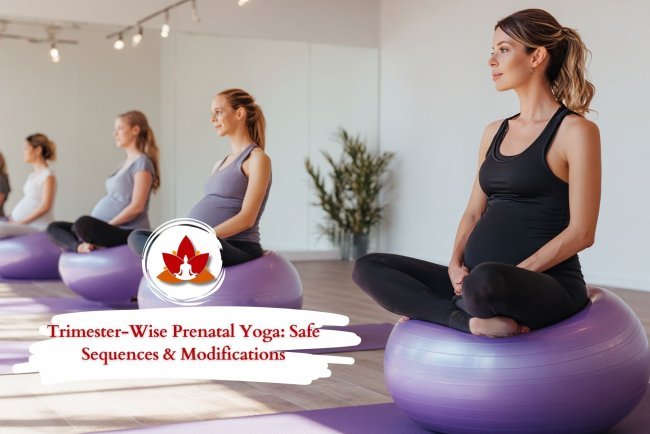
While some safety principles apply throughout pregnancy, specific modifications and contraindications become increasingly important as pregnancy progresses. Understanding trimester-specific needs allows teachers to guide students with clarity, confidence, and care.
First Trimester
The first trimester is a critical period for implantation and early fetal development. Common symptoms include nausea, fatigue, dizziness, and breast tenderness. Yoga during this phase should emphasize grounding, gentle movement, and the cultivation of a calm, meditative practice.
Focus:
-
Gentle mobility
-
Grounding and breath awareness
-
Rest and nervous system regulation
Poses to Avoid:
Belly-Down Poses
Avoid postures that place direct pressure on the abdomen, such as Cobra, Locust, and Bow Pose.
These poses may compress the abdominal area and potentially restrict blood flow to the uterus.
Instead, prioritize gentle, supported back-bending or upright postures.
Deep Backbends
Strong backbends can overstretch the abdominal muscles and place unnecessary strain on the core.
Jumping or Bouncing Movements
Dynamic or jerky movements should be avoided, as they may increase nausea and place stress on the developing embryo.
Lying Flat on the Back (for Extended Periods)
While brief supine positions are usually tolerated early on, it is wise to introduce support from the beginning to prepare for later stages when vena cava compression becomes a concern.
Second Trimester
Many women experience a welcome increase in energy during the second trimester as nausea subsides. At the same time, the uterus and baby grow rapidly, requiring greater attention to alignment, circulation, and balance.
Focus:
-
Hip opening
-
Strengthening the legs and back
-
Balance and stability
Poses to Avoid:
Lying Flat on the Back (e.g., Savasana, Supta Baddha Konasana)
After approximately 20 weeks, lying flat on the back is a strong contraindication. The weight of the uterus can compress the vena cava, reducing blood flow to both mother and baby.
Modification:
Use bolsters or blankets to elevate the torso, or guide students into a supported side-lying Savasana, preferably on the left side.
Deep or Closed Twists
Twists that compress the abdomen can restrict blood flow to the uterus.
Modification:
Teach open twists, rotating from the upper back and shoulders rather than from the belly or front leg.
Strong Core Exercises
Avoid intense abdominal work such as crunches, Boat Pose (Nāvāsana), or full planks, which may increase the risk of diastasis recti (abdominal separation).
Safer Alternatives:
-
Gentle pelvic tilts
-
Modified planks with knees on the mat
-
Breath-coordinated core awareness
Third Trimester
In the final trimester, physical movement becomes more challenging due to the fully expanded belly, reduced breathing space, and changes in balance.
Focus:
-
Pelvic floor awareness
-
Gentle stretching
-
Restorative postures
-
Mental and emotional preparation for childbirth
Poses to Avoid:
All Previous Contraindications
Continue to avoid poses restricted in the first and second trimesters.
Deep Forward Folds
These can place excessive pressure on the abdomen and lower back.
Modification:
Use wide-legged stances, props, and support to create space for the belly.
Inversions
Due to altered balance and a higher risk of falling, poses such as Headstand, Shoulder Stand, and Handstand are contraindicated.
Long Static Holds
Holding poses for extended periods may negatively affect circulation. Encourage gentle movement, slow transitions, and frequent rest instead.
By respecting trimester-specific contraindications and offering thoughtful modifications, prenatal yoga teachers can create classes that feel safe, empowering, and deeply supportive for expectant mothers at every stage of pregnancy.
A Mindful Journey
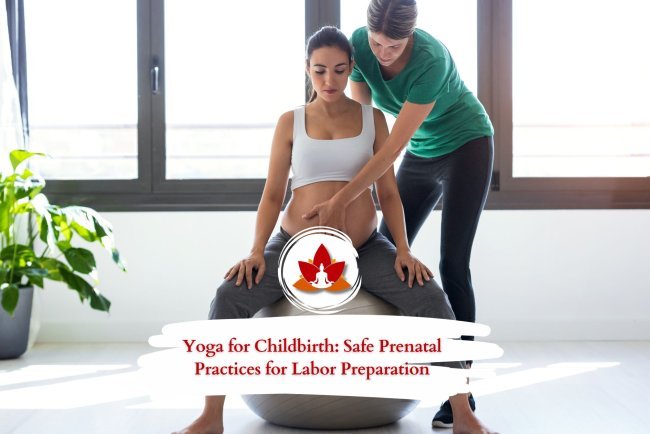
Teaching yoga to pregnant women is both an honor and a responsibility. The goal of prenatal yoga is not performance, but presence—cultivating strength, supporting overall well-being, easing common discomforts such as pregnancy-related lower back pain, and gently preparing the body and mind for childbirth.
By following essential safety principles—such as avoiding overheating, preventing positions that compress the abdomen or restrict blood flow (including prolonged supine postures), and discouraging over-stretching—teachers can create a nurturing and secure environment for expectant mothers. It is always essential to remind students to seek clearance from their healthcare provider before beginning or continuing any physical practice during pregnancy.
Most importantly, encourage students to listen to their bodies. Inner awareness is the most reliable guide during pregnancy, and no pose is more important than comfort, breath, and safety.
For deeper insight into the science, anatomy, and safe teaching techniques of prenatal yoga, you may choose to enroll in the Rishikesh Yogkulam Prenatal Yoga Teacher Training Program—a comprehensive pathway to building a knowledgeable, compassionate, and rewarding teaching career.
Frequently Asked Questions
What's Your Reaction?