Yoga Sutra 1.36 : Viśokā Vā Jyotiṣmatī

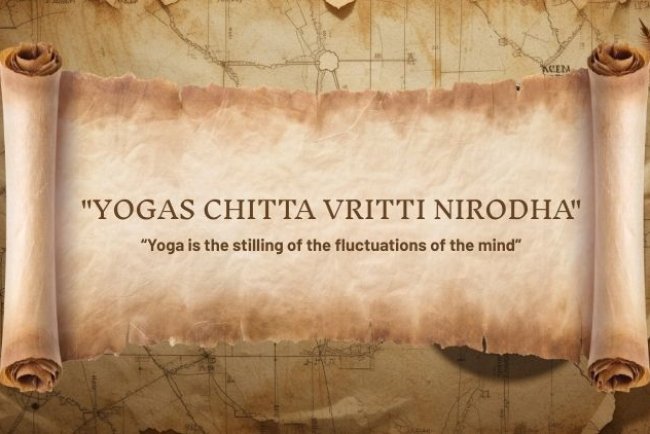
The Yoga Sutras of Patanjali stand as one of the most essential guides to the philosophy and practice of yoga. They offer a systematic path toward calming the mind (citta-vṛtti-nirodhah) and ultimately reaching inner peace and liberation (mokṣa).
In the first chapter—Samadhi Pada—Patanjali outlines methods to help practitioners cultivate concentration and access higher states of consciousness. Within this section, Sutras 1.34 to 1.38 describe five powerful points of focus (dhāraṇās) designed to stabilize the ever-shifting mind.
Among these techniques is the profound teaching of Yoga Sutra 1.36: visoka va jyotismati. This sutra encourages us to turn inward and anchor ourselves in an inner radiance—an unwavering, luminous source of peace that remains untouched by sorrow. It is a reminder that beyond the turbulence of the mind lies a quiet, shining center within us all.
Translation and Meaning
The sutra in Sanskrit reads:
विशोका वा ज्योतिष्मती
viśokā vā jyotiṣmatī ॥ 1.36 ॥
Different scholars translate this aphorism in slightly varying ways, yet all interpretations point to the same central truth:
-
“Or, focus on a pain-free, brilliant inner state; this too leads to steadiness and calm.”
-
“Or by meditating on the Effulgent Light—beyond all sorrow.”
-
“The mind attains stability by perceiving a radiant state that is untouched by suffering.”
Patanjali essentially tells us that directing the mind toward jyotismati—the inner luminous light naturally free from sorrow (visoka)—is a powerful technique for cultivating mental steadiness.
This sutra marks a profound shift: instead of seeking happiness and stability outside ourselves, we are guided inward. It reminds us that there is a radiant, sorrowless quality inherent in consciousness itself, and meditating on this inner light becomes a direct pathway to peace and tranquility.
The Nature of the Inner Light (Jyotismati)
What does Patanjali mean by this “effulgent light” or “radiant perception”? It is not an external light visible to the physical eyes, but a subtle, inner illumination experienced deep within.
Traditional commentaries link this inner radiance to sattva—the guna that represents purity, clarity, luminosity, and bliss. The other two gunas, rajas (restlessness, passion) and tamas (inertia, darkness), create turbulence, suffering, and ignorance, clouding our ability to perceive reality clearly.
As spiritual practices gradually increase sattva in the mind, the inner landscape becomes clearer and brighter. This leads to a sustained state known as jyotiṣmatī pravṛtti—the luminous activity of the mind. In this state, the yogi sees life with purity and accuracy, free from the distortions of desire, anger, greed, ego, or confusion.
The Heart Center as the Focal Point
A widely taught method for practicing this sutra is to visualize or sense this inner luminosity glowing at the heart center—Anāhata chakra (not the physical organ, but the subtle energetic heart). This inner space is described in yogic texts as vast, serene, and filled with light.
For many practitioners, the initial inward turn brings up darkness, emptiness, or the familiar noise of the mind’s commentary. This is completely natural. Patanjali advises patience. With regular practice and gentle awareness, the mind becomes quieter, allowing one to tune into the subtle inner energies. Over time, a sense of brightness, a flame, or a radiant field begins to emerge.
This inner light is deeply blissful, harmonious, and reflective of our true nature—our essential Being.
The State Beyond Sorrow (Viśokā)
The second key term in this sutra, visoka, means “free from sorrow,” “without pain,” or “deeply blissful.” This state is not a momentary escape from life’s difficulties. Instead, it represents a profound shift in perception—one that transcends the usual cycle of pleasure and pain.
Patanjali recognizes that humans naturally chase pleasure and avoid pain, yet even pleasurable experiences can eventually lead to dissatisfaction, craving, or suffering. The yogi, however, seeks moksha—a liberated state where the mind is no longer bound by these fleeting sensations.
By meditating on the inner light, the practitioner connects with a deeper layer of consciousness that remains untouched by worldly suffering. This luminous, sattvic state lies beyond the turbulence of the ordinary mind and its constant fluctuations.
This experience is closely connected to asmitā—the pure sense of “I-am-ness” that exists before the mind becomes entangled with thoughts, roles, and external identities. When the mind settles into this pure asmitā, it becomes vast, quiet, and steady like a waveless ocean.
Yoga Sutra 1.36 guides the practitioner toward this profound stability, helping the mind rest in its original, peaceful nature.
Application in Real Life Today

How can a busy 21st-century person apply this ancient teaching? Patanjali’s wisdom is practical, not abstract philosophy. Yoga Sutra 1.36 offers a simple, direct, and accessible meditation technique that anyone can incorporate into daily life.
Inner Light Meditation Practice
1. Find Stillness
Sit comfortably in a quiet space where you won’t be disturbed. Close your eyes and take a moment to settle.
Allow your awareness to gently withdraw from the outer world and turn inward, noticing the senses drawing back toward the inner landscape.
2. Focus on the Heart Space
Bring your attention to the center of your chest—the location of the heart chakra (Anāhata). Feel this area soften and open.
3. Visualize the Luminosity
Imagine a soft, steady, radiant light or a gentle candle flame glowing within this space. It does not have to be a vivid image; even a subtle sensation or intention is enough.
4. Rest in the Light
Stay with this inner point of concentration (dharana). When the mind wanders—as it inevitably will—kindly guide it back to the inner light without judgment.
5. Experience Viśokā
As your attention remains anchored, notice how the mind begins to clarify and calm. External stress and inner noise gradually lose their power. You are touching the state of viśokā—a perception beyond sorrow.
Home Again
Yoga Sutra 1.36 reminds us that peace is not something we must search for outside—it is an innate quality of our deepest consciousness, simply obscured by the constant fluctuations of the mind.
By focusing on the inner “effulgent light,” the mind becomes steady, clear, and anchored. Over time, this luminous awareness becomes a gateway to transcending sorrow and experiencing a more expansive state of being.
This practice guides us back home to ourselves—a life lived with greater awareness, compassion, and tranquility. The journey is inward, illuminated by the very light we carry within.
What's Your Reaction?